
Creation and Destruction
The Lost SymbolThis flow contrasts the characters’ competing beliefs about transformation, sacrifice, and the responsibility that comes with imagined power.
increasing Bearing strength in each event
 decreasing
Bearing strength in each eventdecreasingA Myth of Apotheosis
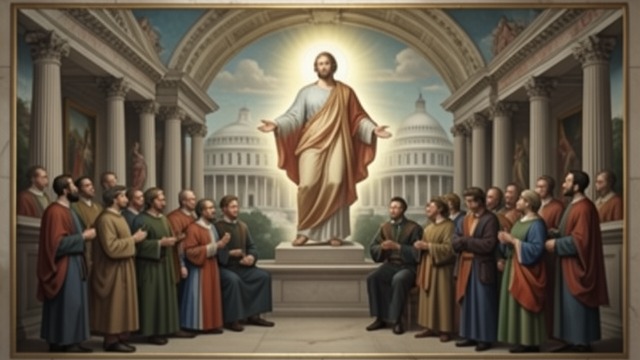
Human Becomes Divine
An Image Above Lawmakers
The fresco of Washington’s apotheosis places the transformation of a human into a god at the center of the Capitol’s symbolic space.
Technology as Magic
Langdon argues that achievements such as flight and long-distance communication might have appeared divine to earlier generations. The image links human progress to changing definitions of the miraculous.
The Sacrifice Doctrine
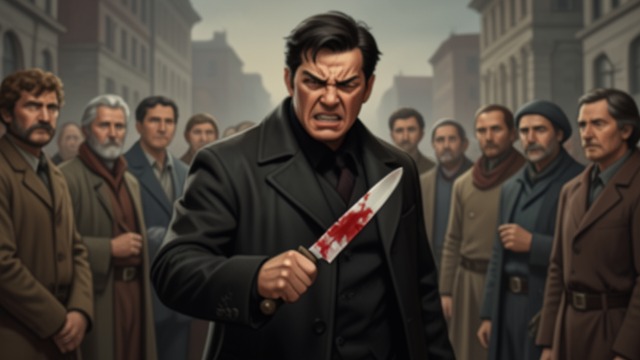
Transformation Through Blood
A Claimed Law
Mal’akh believes that a greater sacrifice yields greater power and prepares himself as the offering that will complete his transformation.
A Dangerous Certainty
His confidence turns a symbolic tradition into permission for violence. The belief is not merely private: it places other lives at risk and narrows every event into a ritual script.
The Father’s Refusal

The Sacrifice Rejected
A Knife in Peter’s Hand
Mal’akh insists that Peter must kill him to save Katherine and fulfill the ritual. Peter is forced to confront his son’s accusation and his own history of guilt.
A Choice Against Violence
Peter refuses to make killing the final proof of love or power. His resistance undermines Mal’akh’s doctrine even before the physical accident ends the ritual.
Order and Chaos
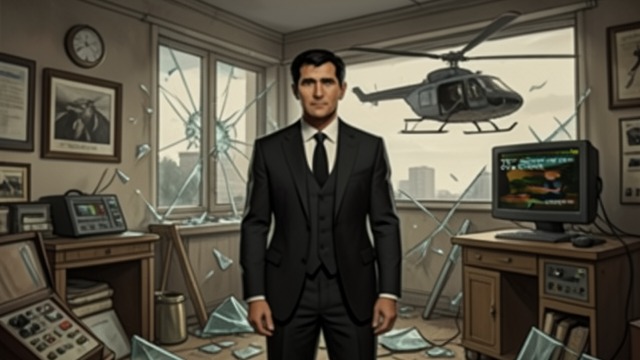
A Broken Performance
Control Lost
Mal’akh expects a carefully staged death to produce a new spiritual state. The helicopter, broken glass, and disrupted transmission turn his ceremony into uncontrolled danger.
The Limits of the Script
Events do not follow the ritual pattern he designed. The scene challenges his belief that symbols and actions can compel the universe to reward him.
A More Modest Treasure
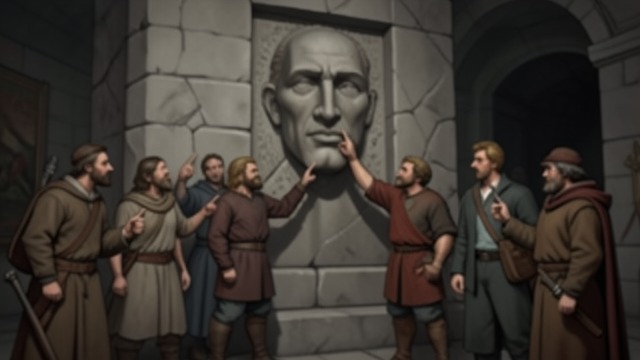
Wisdom in a Book
The Word Reconsidered
Peter reveals that the Lost Word is not a singular incantation but the preserved wisdom of sacred texts, including the Bible beneath the monument.
Creation as Responsibility
The ending redirects power away from domination and toward interpretation, thought, and conduct. Human potential is presented as real enough to demand caution, not as a license for supernatural mastery.
During Langdon’s explanation of the Capitol fresco
During Mal’akh’s preparations for the final ritual
At the altar, moments before the skylight breaks
During the final Temple-room struggle
After the final cipher is explained
